
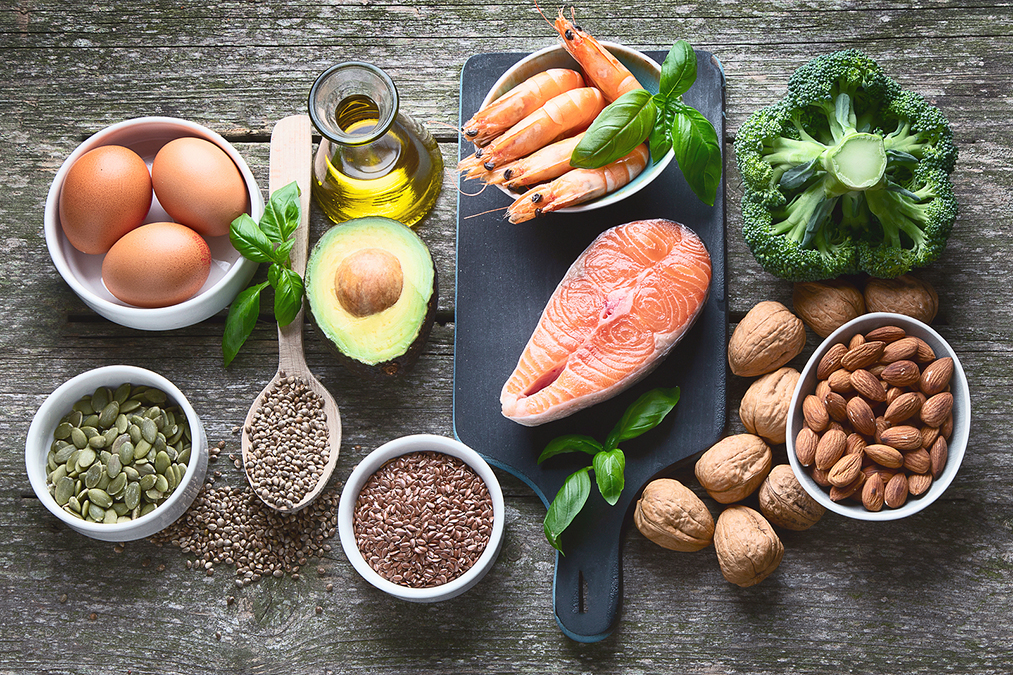
 To date, research into omega-3 fatty acids and heart disease has been a bit confusing. In general, studies seem to show that these fats can reduce our risk of heart disease, but they simultaneously appear to show that omega-3 fats raise LDL (low-density lipoprotein) cholesterol, usually called bad cholesterol.
LDL cholesterol is called bad cholesterol because it is the type that clogs our arteries and causes atherosclerosis.
So how can more LDL be good?
The answer lies in a new study published in the latest Journal of the American Heart Association.
In response to this paradox, researchers from the Universitat Rovira i Virgili and Harvard Medical School hypothesized that the answer lies in the type of LDL cholesterol that is increased by omega-3 fats.
They collected the data of 26,034 people from the Brigham and Women’s Hospital Women’s Health Study. This included their eating habits, their consumption of fish and other sources of omega-3, their medication use, their physical activity levels, their smoking status, and a whole range of other information.
Most importantly, it included the results of nuclear magnetic resonance scans on the participant’s blood that could characterize the components of their blood in detail.
They divided omega-3 intake into total omega-3, fish, and the omega-3 subtypes called eicosapentaenoic, docosahexaenoic, and alpha-linolenic acids.
Alpha-linolenic acids appear in plants like flaxseed, walnuts, and chia. The other two are obtained from fish and, if you are vegetarian, from edible algae.
Those who consumed the most fish and total omega-3 had significantly lower triglycerides (fats in the blood) and higher large VLDL (very-low-density lipoprotein) particles.
Those who consumed the most eicosapentaenoic and docosahexaenoic acids in the form of fish had the highest total and LDL cholesterol, but their cholesterol particles were larger than those who consumed the least of these fatty acids.
Total omega-3 intake as well as docosahexaenoic acid and alpha-linolenic acid also increased the participant’s HDL cholesterol (high-density lipoprotein; so-called “good cholesterol”) and the size of their HDL particles.
These are important findings since they again confirm that it is not our cholesterol levels, but rather the exact character of our cholesterol particles, that matter when it comes to the origins of heart disease.
To be more precise, it is small cholesterol particles that cause atherosclerosis, not large ones, and since omega-3 fats promote large particles at the expense of small ones, it is a good prevention tool against atherosclerosis.
So finally, the traditional medical system is getting closer to the truth. But the fact is, to eliminate all plaque buildup in your arteries, you only need to cut out one food item as explained here…
 Overcoming IBD
 Multiple Sclerosis
 Banishing Bronchitis
 Gum Disease Gone
 Overcoming Onychomycosis
 Neuropathy No More
 The Prostate Protocol
 Brain Booster
 Ironbound
 Solution for Shingles
 The Bone Density Solution
 The Ultimate Healing Protocol
 The Parkinson's Protocol
 The Chronic Kidney Disease Solution
 Overthrowing Anxiety
 The Fatty Liver Solution
 The Hypothyroidism Solution
 The End of Gout
 The Blood Pressure Program
 The Oxigized Cholesterol Strategy
 Stop Snoring And Sleep Apnea Program
 The Arthritis Strategy
 The Vertigo & Dizziness Program
 The 3-Step Diabetes Strategy
 Hemorrhoids Healing Protocol
 The Erectile Dysfunction Master
 Weight Loss Breeze
 The IBS Program
 The Insomnia Program
 The Migraine and Headache Program
 The Neck Pain Solution
 The Menopause Solution
 The Ejaculation Master
 The TMJ Solution
 The Acid Reflux Solution
 The Fibromyalgia Solution
 The Psoriasis Strategy