
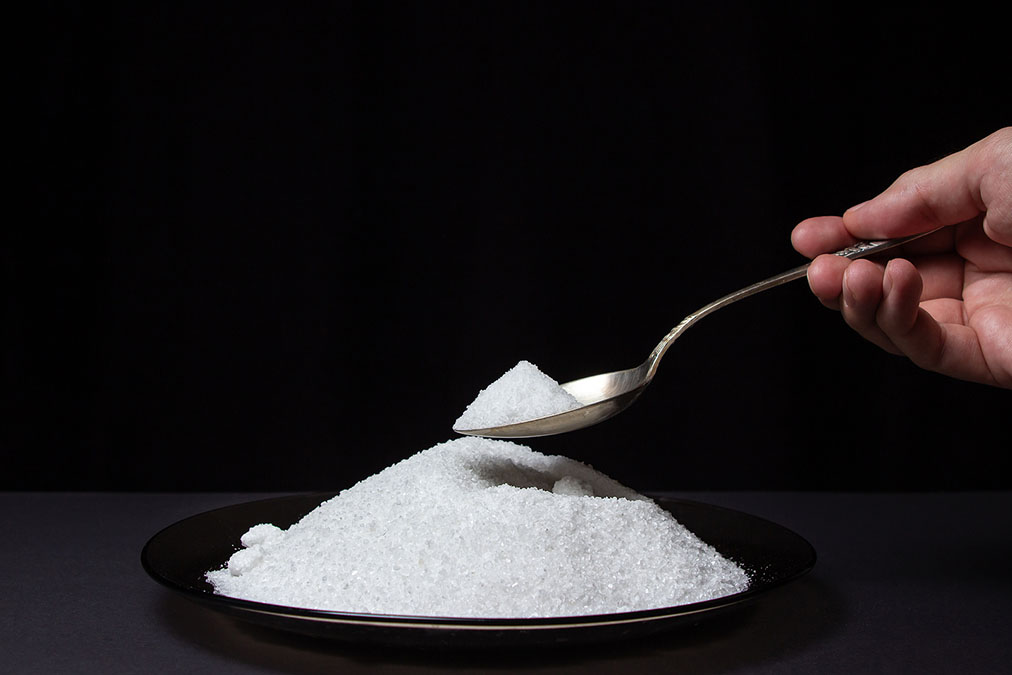
 If you’re at risk or suffering chronic kidney disease (CKD), you’ve probably been told to cut down on salt.
But according to a new study in the journal BMC Nephrology, this is completely wrong.
It’s not about eating less salt but rather loading up on another type of ingredient instead.
There is one big reason why salt is assumed to be a kidney disease risk.
Your blood flows through your kidneys, where your excess water and minerals are stripped out for excretion in your urine. This process requires a balance of salt and potassium in your blood.
If there is too much salt, your kidneys strip less water and minerals out of your blood, meaning that you have too much fluid and minerals in your body.
But this seems to suggest that it is not only salt that increases the risk of kidney disease, but also potassium.
As the Hispanic population has a higher kidney disease risk than white people, the authors of this study analyzed the health data of 9,778 Hispanic Americans collected by the Hispanic Community Health Study/Study of Latinos (HCHS/SOL).
They were recruited between 2008 and 2011 and examined thoroughly upon recruitment and again six years later.
None of them had kidney disease at the beginning of the study, and they had an average age of 41.
Their sodium/potassium ratio was measured via a questionnaire of their food intake, and the scientists measured their estimated glomerular filtration rate to assess their kidney function.
They were divided into high to low quintiles for the consumption of salt and into separate high to low quintiles for the consumption of potassium.
With all this data available, the researchers discovered some important facts.
-
1. The number of kidney disease cases did not differ between the different quintiles of salt intake.
2. The group with the highest potassium intake (2,300–11,000 milligrams per day) had fewer kidney disease cases than those with moderate intake did, and the group with moderate intake had fewer cases than the low-intake group.
3. The group with the highest sodium-to-potassium intake ratio had the most kidney disease cases.
4. Every 500 milligram decrease in daily potassium intake increased the participants’ risk of kidney disease by 11%.
5. Every molar increment in the sodium-to-potassium ratio increased the participants’ risk of kidney disease by 21%.
All this means that it is not salt that is the problem, but rather a high salt intake in the absence of a high potassium intake.
We can easily consume more potassium in the form of beans, lentils, potato skins, winter squash, spinach, broccoli, avocado, banana, cantaloupe, oranges, dried fruit, tomato, cashews and cashew milk, almonds and almond milk, milk, and yogurt.
 Overcoming IBD
 Multiple Sclerosis
 Banishing Bronchitis
 Gum Disease Gone
 Overcoming Onychomycosis
 Neuropathy No More
 The Prostate Protocol
 Brain Booster
 Ironbound
 Solution for Shingles
 The Bone Density Solution
 The Ultimate Healing Protocol
 The Parkinson's Protocol
 The Chronic Kidney Disease Solution
 Overthrowing Anxiety
 The Fatty Liver Solution
 The Hypothyroidism Solution
 The End of Gout
 The Blood Pressure Program
 The Oxigized Cholesterol Strategy
 Stop Snoring And Sleep Apnea Program
 The Arthritis Strategy
 The Vertigo & Dizziness Program
 The 3-Step Diabetes Strategy
 Hemorrhoids Healing Protocol
 The Erectile Dysfunction Master
 Weight Loss Breeze
 The IBS Program
 The Insomnia Program
 The Migraine and Headache Program
 The Neck Pain Solution
 The Menopause Solution
 The Ejaculation Master
 The TMJ Solution
 The Acid Reflux Solution
 The Fibromyalgia Solution
 The Psoriasis Strategy